




How to Evaluate Local Cybersecurity Providers
When a mid-market company types "cyber security near me" into a search engine, they're not just looking for a local address. They're trying to answer a harder question: which provider actually understands my industry, my risk profile, and the regulatory environment I operate in? Proximity matters, but it's one of the least important criteria on the evaluation list. The average cost of a data breach hit $4.44 million in 2025, according to the IBM Cost of a Data Breach Report. Choosing a cybersecurity partner based on a ZIP code alone is a risk no organization can afford. This guide walks you through what to actually evaluate when selecting a local cybersecurity provider, and what red flags to watch for.
Why "Local" Matters, and Where It Doesn't
Local cybersecurity providers offer real advantages: they understand state-level regulations, regional threat actors, and local industry clusters. A firm based in the DC/Northern Virginia corridor understands federal contractor compliance requirements. A provider in Houston knows the OT/ICS risk profile of energy infrastructure. That geographic context has genuine value.
Where "local" stops mattering: day-to-day advisory work. Threat intelligence doesn't come from driving distance. Framework alignment with NIST CSF or SOC 2 doesn't require an in-person meeting. The best advisory relationships today are structured around quarterly onsite engagements combined with continuous remote monitoring, not proximity for its own sake.
The right question isn't "who is closest?" It's "who has the depth to serve companies in my industry, at my size, in my regulatory environment?"
Looking for expert cybersecurity guidance? Z Cyber's advisory team can help.
Learn More6 Criteria for Evaluating Local Cybersecurity Providers
1. Framework Depth, Not Just Framework Awareness
Every cybersecurity firm claims to work with NIST and SOC 2. The meaningful differentiator is depth. Can they perform a Current State Assessment against your specific framework requirements? Do they produce a Gap Analysis with prioritized remediation steps, or a generic checklist? Ask for a sample deliverable: not a slide deck, but an actual assessment output.
Framework familiarity is table stakes. What you need is a provider who can translate framework language into an actionable security roadmap specific to your organization.
2. Advisory Depth vs. Tool Delivery
The market is crowded with compliance-only tools that track checkbox status across frameworks. These tools have a place, but they are not a substitute for security advisory. If your provider's primary output is a dashboard showing control pass/fail status, you have a tool vendor, not an advisory partner.
A genuine advisory firm assigns dedicated experts who know your environment, attend your board meetings, and help you make risk-informed decisions, not just report on control status. When evaluating a local provider, ask: "What does our dedicated advisor deliver beyond the platform?"
3. Board-Ready Reporting Capability
Board communication is one of the most underserved needs in mid-market cybersecurity. 90% of non-executive directors lack a measure of confidence in the value of cybersecurity investment, according to Gartner's 2026 Board of Directors Survey. Your provider needs to bridge that gap, not just alert your security team.
Ask potential providers: "What does our board reporting look like? Can I see an example?" A provider who cannot produce a frozen, print-ready executive report on demand is leaving a critical gap in your security program.
4. Industry-Specific Experience
Cybersecurity requirements differ significantly by vertical. Healthcare organizations face HIPAA and HITECH exposure. Defense contractors must navigate NIST 800-171 compliance requirements. Financial services firms deal with SEC cybersecurity disclosure rules and state-level requirements. Industrials companies carry OT/ICS-specific risk that most IT-focused firms are unqualified to assess. Electric and energy utilities answer to NERC CIP, the most prescriptive cybersecurity mandate in U.S. critical infrastructure.
A generalist provider who "also does cybersecurity" is a liability in regulated industries. Verify that your candidate firm has delivered engagements, not just proposals, in your specific sector.
5. Continuity of Coverage
One-time assessments and annual penetration tests create a false sense of security. The threat environment changes weekly. A mean time to identify and contain a breach of 241 days, as reported by IBM in 2025, means that a vulnerability discovered on day one of your engagement may not surface as a breach for eight months.
Evaluate providers on their continuous monitoring capabilities, not just their one-time deliverable quality. Does your posture update in real time? Can your advisor see drift from baseline before it becomes a headline?
6. Transparency on Subcontracting
Many regional cybersecurity firms subcontract specialized work (penetration testing, forensic incident response, compliance audits) to third parties. This isn't inherently a problem, but it needs to be disclosed. If your provider subcontracts, you need to know: who are those partners, what are their qualifications, and how is your data handled across the chain?
Find Z Cyber in Your Metro
See how Z Cyber's Glance platform delivers this.
Find Z Cyber in Your Metro →Cyber Security Near Me: Where Z Cyber Serves
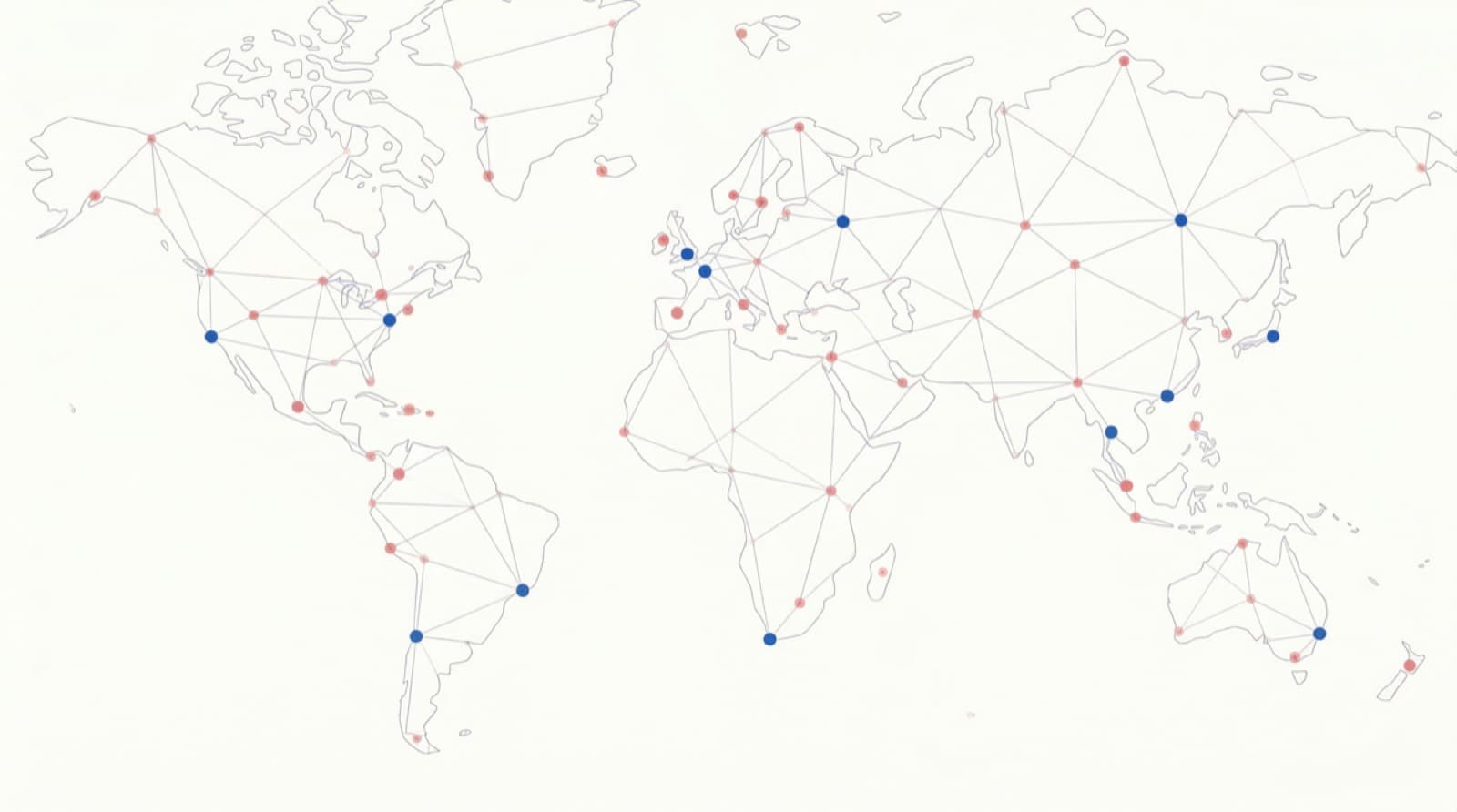
Z Cyber operates as a national advisory firm with established presence across nine metro service areas. Each engagement is anchored by a dedicated advisor with regional context, not a call center rotation. Z Cyber currently serves organizations in:
- Washington, DC / Northern Virginia: Federal contractors, defense industrial base, government-adjacent organizations
- New York City: Financial services, asset management, insurance
- Houston: Energy, oil and gas, industrials, OT/ICS environments
- Nashville: Healthcare systems, healthcare technology, managed care
- Charlotte: Regional banking, fintech, professional services
- Huntsville: Defense contractors, aerospace, government programs
- San Francisco / Austin: SaaS companies, technology startups, venture-backed firms
- Chicago: Financial services, manufacturing, logistics
- Atlanta: Healthcare technology, logistics, financial technology
In each market, Z Cyber's advisory model is the same: a structured Current State Assessment, a Cyber Blueprint roadmap, continuous monitoring through the Glance platform, and board-ready reporting that gives executives the visibility they need without requiring a dedicated security analyst to build a deck.
Z Cyber is not a software company. It is an advisory firm with a proprietary platform, Glance, built to deliver advisory outcomes at scale across mid-market organizations of 50 to 2,000 employees.
Questions to Ask Any Cybersecurity Company Near You
Before you sign an engagement, run through this checklist with any candidate provider:
- What frameworks do you specialize in, and can I see a sample assessment deliverable?
- Who is my dedicated advisor, and what are their credentials?
- How does board reporting work? Can I see an example output?
- Do you have direct experience with companies in my industry and at my revenue size?
- What is your continuous monitoring capability between formal assessments?
- Do you subcontract any specialized services, and to whom?
- How do you handle a material incident, who do I call, and what is the SLA?
The answers will quickly separate advisory partners from tool vendors and generalist IT firms who have added "cybersecurity" to their service menu.
Conclusion
Searching for cybersecurity services near you is a reasonable starting point, but don't let geography be your primary filter. Evaluate on framework depth, advisory quality, board reporting capability, and industry experience. Those criteria will consistently outperform proximity as predictors of a successful engagement. Z Cyber serves nine major metro markets with the same advisory-first model: a dedicated expert, a structured roadmap, and a platform that keeps your posture visible between assessments.
Ready to strengthen your security posture?
Talk to Z Cyber's advisory team about building your Cyber Blueprint.
Frequently Asked Questions
How do I find a reputable cybersecurity company near me?
Start by evaluating framework depth (NIST, SOC 2, ISO 27001), industry experience in your specific sector, and advisory continuity, not just proximity. Ask for sample assessment deliverables, not just sales presentations. Z Cyber serves nine major US metro markets including DC/NOVA, NYC, Houston, Nashville, Charlotte, Huntsville, SF/Austin, Chicago, and Atlanta.
What is the difference between a cybersecurity advisory firm and a managed security operations provider?
A managed security operations provider typically focuses on monitoring, detection, and response: the operational layer of security. A cybersecurity advisory firm focuses on strategy, framework alignment, risk management, and executive reporting. Many organizations need both: an operations provider for monitoring and an advisory firm for program design, board reporting, and governance.
Should I hire a local cybersecurity firm or a national one?
The best model combines national advisory expertise with regional context. A firm that understands your industry's regulatory environment and has local presence for onsite engagement offers more value than either a purely local generalist or a purely remote national firm with no regional knowledge.
What should a cybersecurity assessment include?
A thorough Current State Assessment should cover your existing control environment, framework alignment gaps (against NIST CSF or SOC 2 as applicable), critical asset inventory, third-party risk exposure, and a prioritized remediation roadmap. The output should be actionable, not a generic checklist.
How much does a local cybersecurity provider typically cost?
Costs vary significantly by scope. A managed cybersecurity advisory engagement for a mid-market company typically ranges from $5,000–$15,000 per month depending on organization size, frameworks required, and advisory intensity. One-time assessments may range from $15,000–$60,000 depending on scope and industry.
Subscribe for Updates
Get cybersecurity insights delivered to your inbox.